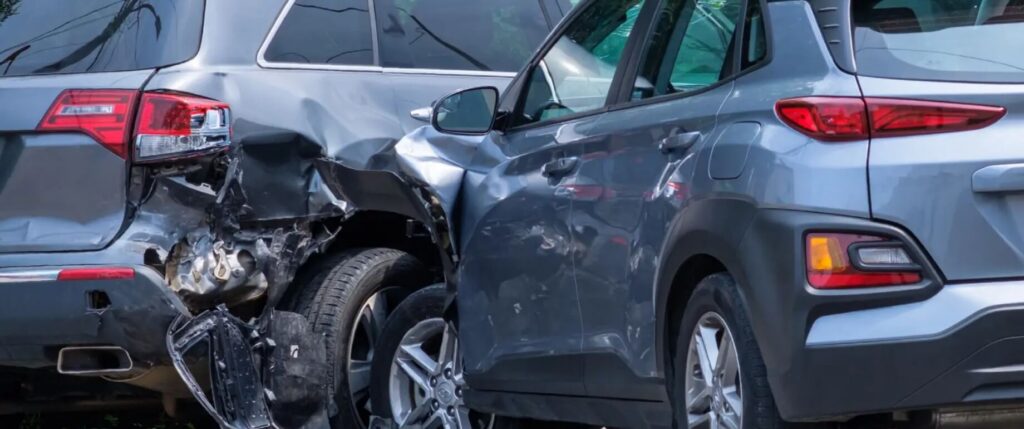

Negligence is how almost every personal injury claim in Nevada gets decided, and understanding how negligence works in personal injury is the difference between knowing you were wronged and being able to prove it. Clark County recorded 239 traffic deaths in 2025, according to Datos de la Oficina de Seguridad Vial de Nevada, and Nevada hospitals treated 18,119 trauma patients that year. Behind most of those cases is the same legal question: did someone fail to act with reasonable care, and did that failure cause the harm?
Being hurt through no fault of your own doesn’t automatically mean an insurer will pay. You, or your lawyer, have to prove negligence under Nevada law, and the other side will look for every gap. This guide explains what negligence means, the four elements Nevada courts require, how shared fault reduces what you recover, and what evidence actually proves a case.
Negligence in 30 Seconds
To win a negligence claim in Nevada, you must prove four things:
- Deuda: the other person owed you a duty to act with reasonable care.
- Infringimiento: they failed to meet that duty.
- Causación: their failure caused your injury.
- Daños: you suffered real losses, such as medical bills, lost wages or pain.
If you were partly at fault, you can still recover as long as your share is 50% or less, but your award shrinks by your percentage. In most cases you have two years from the injury to file a lawsuit.
What Is Negligence?
Negligence is the failure to use the care a reasonably careful person would use in the same situation. It is not about intent. A driver who glances at a text and rear-ends you didn’t mean to hurt anyone, but a reasonable driver keeps their eyes on the road, so the law treats that lapse as negligence. Nevada’s general liability statute, NRS 41.130, makes a person whose wrongful act, neglect or default causes an injury responsible for the damages.
The yardstick is the “reasonable person”: an imaginary, ordinarily careful adult. Courts don’t ask whether the defendant did their personal best. They ask what a reasonable person would have done in the same circumstances. Some defendants are held to a higher, professional standard. A doctor is measured against a reasonably careful doctor in the same field, and a commercial truck driver against federal trucking safety rules.
Negligence is different from:
- Intentional torts, such as assault, where the defendant meant to cause harm.
- Strict liability, where a defendant can be responsible without any carelessness at all, as with some defective products.
Most car crashes, slip and falls, dog bites, nursing home injuries and workplace accidents involving third parties are negligence cases. Nevada is also an at-fault state, not a no-fault state, which is why proving negligence matters so much here: the negligent driver’s insurer pays, not your own.
The Four Elements of Negligence Under Nevada Law
The Nevada Supreme Court has spelled out the test directly. To win a negligence claim, a plaintiff must prove the existence of a duty of care, breach of that duty, legal causation and damages (Sanchez v. Wal-Mart Stores, 2009). Think of them as links in a chain: miss any one of the four and the claim fails, no matter how strong the other three are.
[IMAGE: Four-elements chain graphic — duty, breach, causation, damages]1. Duty of Care
A duty of care is a legal obligation to act reasonably to avoid harming others. In Nevada, whether a duty exists is a question of law decided by the judge, not the jury. Common duties include:
- Drivers owe everyone on the road a duty to drive safely and obey traffic laws. That covers accidentes de auto, motorcycle crashes y rideshare collisions.
- Property owners, including casinos, hotels, stores and apartment complexes, owe visitors a duty to keep the premises reasonably safe. In Nevada, responsabilidad de locales is simply negligence with the duty coming from ownership or control of the property.
- Dog owners owe a duty to control their animals. Nevada has no “one free bite” rule (see our guide to Leyes sobre mordeduras de perro en Nevada).
- Nursing homes and care facilities owe residents a duty of reasonable care and supervision.
- Doctors and hospitals owe patients the standard of care of their profession.
Duty has limits. In Turner v. Mandalay Sports Entertainment (2008), the Nevada Supreme Court held that a Las Vegas ballpark had a limited duty to fans hit by foul balls, because that risk is part of the game. Whether a duty exists, and how far it reaches, is often the first fight in a premises case.
2. Breach of Duty
A breach happens when someone falls short of the care their duty requires. This is usually the most contested element, and in Nevada it’s generally a question of fact for the jury.
Examples of breach:
- Speeding, running a red light or texting while driving
- Turning left without yielding to oncoming traffic (left-turn accidents)
- Leaving a spilled drink on a casino floor for an hour without cleaning it or putting out a warning sign
- A trucking company letting a driver exceed federal hours-of-service limits
- Understaffing a nursing home so residents go unchecked for hours
For property owners, breach usually turns on notice: did the owner know, or should it have known, about the hazard in time to fix it? A spill that happened 30 seconds before you fell is a harder case than one that sat for an hour while employees walked past. Surveillance footage often answers that question, which is why it needs to be preserved quickly.
3. Causation
Causation links the breach to your injury. The Nevada Supreme Court splits it into two parts (Clark County School District v. Payo, 2017):
- Actual cause (“but for” cause): your injury would not have happened but for the defendant’s conduct.
- Proximate cause: the injury was a foreseeable result of that conduct, not some freak, unforeseeable chain of events.
Causation is where insurers fight hardest in injury cases. Expect arguments like “your back pain is from an old injury,” “the crash was too minor to cause a concussion,” or “you would have needed that surgery anyway.” Nevada law lets you recover when an accident makes an existing condition worse, so the real question becomes how much worse, and that is proven with medical records and doctors’ opinions. In lesión cerebral traumática cases, causation often depends on neuropsychological testing rather than a scan.
4. Damages
The final element is actual harm. Negligence without injury isn’t a claim: a driver who runs a red light and misses you has been careless, but there’s nothing to recover. Once you prove real losses, Nevada allows:
- Economic damages: medical bills, future care, lost wages, lost earning capacity and vehicle repair or replacement
- Daños no económicos: pain, suffering, distres emocional and loss of enjoyment of life
- Daños punitivos, in rare cases where the defendant acted with malice, oppression or fraud (NRS 42.005). Ordinary negligence isn’t enough; it takes something closer to conscious disregard of others’ safety, as in some drunk-driving crashes.
When negligence causes a death, the family and the estate can bring a muerte injusta claim under NRS 41.085 for losses such as grief, lost support and funeral costs. Nevada does not cap pain-and-suffering damages in ordinary negligence cases; the cap many people have heard about applies to medical malpractice.
Types of Negligence You May Hear About
Ordinary negligence
Ordinary negligence is the everyday failure to use reasonable care, and it covers most car crash and slip-and-fall claims.
Gross negligence
Gross negligence is a much more serious failure, which Nevada courts have described as a lack of even slight care. A nursing home that leaves a resident’s wound dressings unchanged for days is a common example. It can matter in cases involving waivers and in arguments for higher damages, but it is not the same as the conscious disregard required for punitive damages.
Negligence vs. recklessness
People often use “reckless” and “negligent” interchangeably, but they aren’t the same. Negligence is carelessness: failing to take the care a reasonable person would. Recklessness is worse: the person knows their conduct creates a serious risk of harm and goes ahead anyway, like weaving through Strip traffic at twice the speed limit. Reckless conduct doesn’t let anyone off the hook. Anyone reckless enough to injure you also failed to use reasonable care, so a negligence claim still applies, and recklessness can strengthen arguments for punitive damages.
Negligence per se
Negligence per se means negligence established by breaking a safety law. Under Nevada law, a violation of a statute establishes the duty and breach elements if (1) you belong to the group of people the law was meant to protect and (2) your injury is the kind of harm the law was meant to prevent (Ashwood v. Clark County, 1997). In Vega v. Eastern Courtyard Associates (2001), the Nevada Supreme Court applied the rule to a Clark County building code violation: a medical-office ramp steeper than the code allowed.
Negligence per se is common in traffic cases. A driver who causes a crash while over Nevada’s DUI limit, or while running a red light, has violated a statute written to protect other road users. You still have to prove causation and damages, but you don’t have to argue about what a reasonable driver would have done.
Professional negligence (medical malpractice)
Claims against doctors, hospitals and other healthcare providers follow a separate set of Nevada rules in NRS Chapter 41A: an expert affidavit to file suit, a different filing deadline and a cap on non-economic damages that is rising each year under a 2023 law. See our overview of medical malpractice in Las Vegas.
Vicarious liability
Sometimes one party is responsible for another’s negligence. An employer is generally liable for an employee’s negligence on the job, which is why a accidente de camión claim often names the trucking company along with the driver (see who is liable in a Nevada truck accident). Under NRS 41.440, a vehicle owner who lets a minor or an immediate family member drive can also share responsibility for that driver’s negligence.
When You Share the Blame: Nevada’s Comparative Negligence Rule
Nevada uses negligencia comparativa modificada under NRS 41.141. If you were partly at fault, you can still recover as long as your share of fault is not greater than the defendants’ combined share. In practice:
| Your share of fault | What happens to a $100,000 award |
|---|---|
| 0% | You recover $100,000 |
| 20% | You recover $80,000 |
| 50% | You recover $50,000 |
| 51% or more | You recover nothing |
Nevada is no a contributory negligence state, where any fault at all on your part bars recovery. That’s the rule in North Carolina and a few other states, and it’s why advice from out-of-state websites can be misleading here.
Insurers know the 51% line well. Expect them to argue you were speeding, looking at your phone, wearing the wrong shoes or ignoring a warning sign. Every percentage point they shift onto you comes straight off your recovery. In choques por atrás, for example, the rear driver is usually at fault, but a front driver who brake-checks or has broken brake lights can carry a share.
Multiple defendants: each pays only its share
Here is the part most negligence guides leave out. When more than one defendant is negligent, NRS 41.141 generally makes each one severally liable: responsible only for its own percentage of the damages, not the whole amount. If a jury finds a driver 70% at fault and a negligent road contractor 30% at fault, you collect each share from each defendant. If one has no insurance, the other doesn’t cover the gap.
There are exceptions where defendants are jointly and severally liable (each can be made to pay the full amount), including strict liability claims, intentional torts, toxic or hazardous substance releases, and defendants who acted in concert. Which rule applies changes who you sue and which insurance policies matter, so identifying every responsible party early is critical.
How Negligence Is Proven: The Evidence That Matters
Negligence is proven with evidence, not with how sure you are about what happened. The evidence that carries the most weight in Las Vegas cases:
- Police or DMV reports: Metro or Nevada State Police crash reports, or an SR-1 filed with the DMV when no officer investigated
- Video: dashcam, doorbell, traffic camera and casino or store surveillance footage, which is often recorded over within days
- Photos: vehicle damage, skid marks, the hazard that caused a fall, lighting, signage and your injuries over time
- Witness statements: names and phone numbers gathered at the scene, before tourists fly home
- Electronic data: vehicle “black box” data, truck ELD logs, phone records in distracted-driving cases
- Records and policies: maintenance logs, inspection reports, cleaning schedules, staffing records, prior complaints
- Medical records: treatment from the first visit forward, which is the backbone of causation
- Expert testimony: accident reconstructionists, doctors, engineers and economists
Your own conduct also becomes evidence. A recorded statement given to the other driver’s insurer, a social media post from the weekend after the crash, or a gap in medical treatment can all be used to argue you weren’t hurt or were partly to blame.
Common Defenses to a Negligence Claim
Defendants and their insurers use a familiar set of arguments:
- Comparative fault: “You were partly or mostly responsible.” This is the most common defense and the one that directly reduces your award.
- No duty: “We didn’t owe this person anything,” often raised in premises cases about trespassers or open-and-obvious hazards.
- No causation: “The injury came from something else,” such as an old injury, aging or a later accident.
- Assumption of risk: En Auckenthaler v. Grundmeyer (1994), Nevada largely folded this defense into comparative fault. A signed waiver (express assumption of risk) can still matter, especially for recreational activities, but waivers don’t excuse everything.
- Statute of limitations: “You filed too late.” Most Nevada injury claims must be filed within two years under NRS 11.190(4)(e), and settlement talks with an insurer do not pause that clock. Claims against a government agency are capped at $200,000 per claimant under NRS 41.035 and carry extra notice steps.
How Negligence Works in Practice: A Las Vegas Example
Here’s how the four elements and shared fault come together in a typical case. (This is an illustrative example, not a real client.)
Maria is driving home on Flamingo Road when a delivery driver, checking a route on his phone, runs a red light and T-bones her car. She has a broken wrist and a concussion and misses six weeks of work.
- Deuda: every driver owes others a duty to obey traffic signals.
- Infringimiento: running a red light while using a phone breaks that duty, and because it violates Nevada traffic law, it may be negligence per se.
- Causación: but for the red-light run, the T-bone collision doesn’t happen, and a broken wrist and concussion are foreseeable results of a side impact.
- Daños: ER and orthopedic bills, therapy, lost wages, and her pain and the weeks she couldn’t care for her kids.
The delivery company’s insurer argues Maria was going 8 mph over the limit and could have braked sooner. If a jury agrees and assigns her 10% of the fault, a $150,000 verdict becomes $135,000. And because the driver was working, his employer can be held responsible for his negligence, which often means a larger commercial policy is available.
How Negligence Works in Personal Injury: FAQs
¿Cuáles son los cuatro elementos de la negligencia?
Obligación, incumplimiento, causalidad y daños. La Corte Suprema de Nevada exige que el demandante pruebe todos los cuatro elementos para ganar un caso de negligencia.
¿Cuál es la diferencia entre negligencia y negligencia grave?
La negligencia es el incumplimiento de la obligación de ejercer la diligencia debida. La negligencia grave es una falta mucho más grave, que se acerca a la falta de diligencia mínima. Ambas pueden dar lugar a una reclamación por daños, pero en Nevada los daños punitivos requieren más que la negligencia grave: malicia, opresión o fraude.
¿Puedo recuperar los fondos si fui parcialmente responsable en Nevada?
Sí, si su parte de culpa es del 50% o menos. Su premio se reduce en función de su porcentaje. Si es del 51% o más, no recibirá nada.
¿Qué es la negligencia per se?
Negligence established by breaking a safety law, such as a traffic or building code, when you’re in the group the law protects and suffered the type of harm it was meant to prevent. It proves duty and breach; you still have to prove causation and damages.
¿Quién decide si alguien fue negligente?
El juez decide si existió un deber legal. El jurado suele decidir si ese deber fue infringido, si la infracción causó su lesión, qué porcentaje corresponde a cada parte y cuánto vale su indemnización. La mayoría de los casos se resuelven antes del juicio, basándose en lo que probablemente decida el jurado.
¿Cuánto tiempo tengo para presentar una demanda por negligencia en Nevada?
Generally two years from the date of injury under NRS 11.190(4)(e), and negotiating with the insurer doesn’t extend it. Property damage claims have three years, medical malpractice has its own deadline, and claims against government agencies require additional steps, so don’t wait.
¿Necesito un abogado para demostrar negligencia?
Not legally, but insurers have adjusters and defense lawyers working to shift fault onto you and dispute causation. A lawyer preserves evidence before it disappears, brings in the right experts and knows how Nevada’s fault rules affect what your claim is worth. Here’s more on ¿Por qué es útil contratar a un abogado de lesiones personales?.
Hurt by Someone Else’s Negligence? Talk to a Las Vegas Injury Lawyer.
Negligence cases are won or lost on evidence that starts disappearing the day of the accident, and Nevada’s two-year clock is already running. Founding attorney Jordan J. Butler has spent nearly two decades in litigation, and you speak with him directly, not a case manager. He’ll look at who owed you a duty, how they broke it, and which insurance policies are in play, then tell you plainly what your case is worth.
Las consultas son gratuitas, no hay ningún costo salvo si ganamos, y se habla español. Llame (702) 702-7575 o solicitar una revisión gratuita del caso. Learn more about how we help as a Abogado de lesiones personales en Las Vegas, incluidos resbalón y caída y abuso en hogares de ancianos .
Este artículo tiene carácter informativo y no constituye un asesoramiento jurídico. Su lectura no crea una relación de abogado-cliente.