
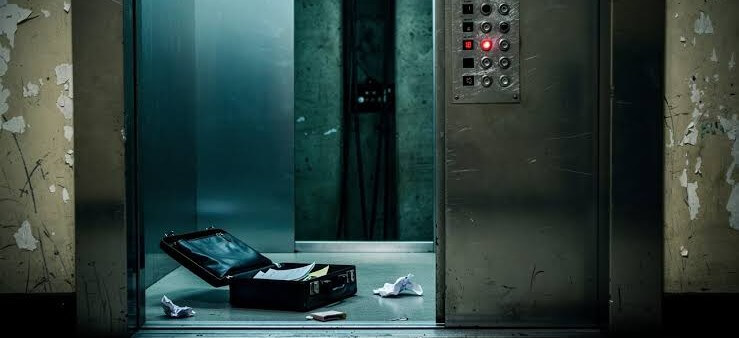
Court King Injury Law is a Las Vegas elevator accident lawyer firm representing people hurt by elevator drops, sudden stops, closing doors and misleveled cars in hotels, casinos, condo towers, offices and apartment buildings across Clark County. Nationally, elevators and escalators kill about 30 people and seriously injure about 17,000 each year, and elevators cause almost 90% of those deaths (CPWR report, CDC Stacks). Hospital-treated elevator and escalator injuries among the public rose more than 30% from 2007 to 2017 (CPWR, 2018).
Las Vegas runs on elevators, from resort towers and high-rise condos to casino parking garages, and they don’t always work. Two lawsuits filed in Clark County allege that hotel elevators fell several floors in 2023: one at Palms Place, where a guest says a car dropped 22 stories (Las Vegas Review-Journal), and one at the Excalibur (AboutLawsuits). Both are allegations, not findings.
El abogado fundador Jordan J. Butler cuenta con casi dos décadas de experiencia en litigación, y usted puede hablar directamente con él. Las consultas son gratuitas; no se cobra nada a menos que ganemos, y se habla español.
[Call (702) 702-7575] · Solicite una revisión gratuita de su caso
Nevada Holds Elevator Owners to a Higher Duty of Care
In most responsabilidad de locales cases, a property owner only has to use reasonable care. Elevators are different. Nevada courts treat the owner of a passenger elevator like a common carrier, such as a bus or train company, because riders can’t protect themselves once the doors close. This rule is often the strongest part of an elevator claim.
| Regla | Qué significa para su reclamación | Fuente |
|---|---|---|
| Higher duty for elevator owners | The owner “owes a higher degree of care” in carrying people from floor to floor | Smith v. Odd Fellows Bldg. Ass’n, 46 Nev. 48 (1922); M & R Inv. Co. v. Anzalotti, 105 Nev. 224 (1989) |
| Limited to riding risks | The higher duty covers the ride itself. Hazards unrelated to the ride, like a wet lobby floor, are judged by ordinary care. | First Transit, Inc. v. Chernikoff, 445 P.3d 1253 (Nev. 2019) |
| The accident can prove negligence | If the elevator was under the defendant’s exclusive control and this kind of accident doesn’t usually happen without negligence, a jury may infer negligence | Otis Elevator Co. v. Reid, 101 Nev. 515 (1985) |
| Operating permit | No elevator may run without a state permit | NRS 455C.100 |
| Owner responsible for maintenance | After the permit issues, the owner is responsible for safe operation and maintenance, and owns the maintenance records | NAC 455C.504 |
| La culpa compartida | Recupera si tu culpa fue del 50% o menos; tu indemnización se reduce en función de tu participación. | NRS 41.141 |
| Plazo para presentar una demanda | 2 years from the injury | NRS 11.190(4)(e) |
El Anzalotti case involved an elevator injury at the Dunes Hotel on the Strip, so this rule comes straight out of a Las Vegas resort case. For a refresher on how fault is proved, see Cómo funciona la negligencia en Nevada.
Types of Elevator Accidents We Handle
- Sudden drops and uncontrolled descents. A failed brake, controller or hoist can let the car fall several floors before the safety system catches it.
- Violent sudden stops. An emergency stop can throw riders into the walls or floor, especially older guests and people in wheelchairs.
- Misleveling. The car stops above or below the floor and passengers trip stepping out. This is one of the most common causes of elevator fractures.
- Doors that close on riders. Worn door sensors and badly adjusted door timing crush hands, arms and feet and knock people down.
- Entrapment. Being stuck between floors can lead to panic, medical emergencies and falls when people try to climb out.
- Falls into open shafts. A hoistway door that opens when no car is there can cause a fatal fall.
- Worker injuries. From 2011 to 2016, 145 construction workers died in elevator-related incidents nationwide (CPWR). Mechanics, installers and anyone working near an open shaft on Las Vegas construction projects face that risk.
These accidents happen in Strip resort towers, high-rise condos, casino parking garages, office buildings, medical buildings and apartment complexes across the valley.
Injuries From Elevator Accidents
A sudden drop or stop compresses the spine, and a misleveled floor or closing door causes falls. Common injuries include lesiones cerebrales traumáticas and concussions, herniated discs and spinal cord injuries, hip, wrist and ankle fractures, crush injuries and amputations of fingers or limbs, and neck and back injuries. Entrapment and free falls can also leave lasting anxiety, claustrophobia or PTSD, which can be part of a claim (see emotional distress damages).
Who Is Liable for an Elevator Accident in Las Vegas?
- The building owner or operator: the hotel-casino, condo association, landlord or property manager. Owners carry the higher common-carrier duty, and under Nevada regulations they remain responsible for maintenance even when they hire a contractor.
- The elevator maintenance company. A contractor isn’t held to the common-carrier standard, but it must use reasonable care. The Nevada Supreme Court has upheld judgments against elevator maintenance companies in American Elevator Co. v. Briscoe (1977) y Otis Elevator Co. v. Reid (1985).
- The manufacturer or installer, when a defective part or design caused the failure. Nevada allows strict product liability claims for defective products.
- Una agencia de gobierno, when the elevator is in a public building, such as a county facility or Harry Reid International Airport. These claims are capped at $200,000 per claimant under NRS 41.035.
Workers hurt on the job usually can’t sue their own employer and get compensación al trabajador instead. But they can often bring a separate claim against the building owner, the elevator contractor or another company on a construction site.
Why Elevator Evidence Disappears Fast
En virtud de NAC 455C.526, the owner must promptly report an elevator accident that causes serious injury to the state Mechanical Compliance Section. If a part may have failed, the elevator must be shut down, and no part can leave the premises without the Section’s approval. That protects some evidence, but not all of it. Cab and lobby video is often recorded over within days, and maintenance companies may repair the elevator once it is cleared.
We send preservation letters right away and demand:
- The maintenance control program and maintenance logs, which the owner must keep
- Callback and trouble tickets showing earlier complaints about the same elevator
- State inspection reports and violation notices
- The controller’s fault and event logs
- Surveillance video from the cab, lobby and hallway
Repeated callbacks for the same problem often show the owner or contractor knew about the danger and didn’t fix it.
Compensation After an Elevator Accident
Your claim can include past and future medical care, lost wages and earning capacity, pain and suffering, and the cost of help at home. Nevada does not cap pain-and-suffering damages in these cases. Daños punitivos are possible when a defendant acted with conscious disregard for safety, such as ignoring a known hazard.
Wrongful Death From an Elevator Accident
When an elevator accident is fatal, the family and estate can bring a muerte injusta claim for funeral costs, lost financial support, and the loss of companionship.
What to Do After an Elevator Accident
- Report it to security or the front desk and get the incident report number. Ask that the elevator be taken out of service.
- Write down the elevator number or bank, the floor and the time.
- Photograph the cab, the gap if the car was misleveled, your injuries, and the operating permit posted in the elevator.
- Get medical care the same day. UMC and Sunrise Hospital are both Level I trauma centers.
- Get witness names and phone numbers. Many are tourists who leave within days.
- Don’t give a recorded statement to the hotel’s insurer or the elevator company.
¿Por qué elegir Court King Injury Law?
Jordan J. Butler was named a Top Attorney by Nevada Business Magazine, holds a Preeminent rating from Martindale-Hubbell, and is licensed in Nevada and Utah (full background). Elevator cases often pit one injured person against a resort, its insurer and a national elevator company. We prepare every case for trial from the start, work with independent elevator consultants, and handle cases in the Tribunal del Distrito Judicial 8 and in federal court in Las Vegas, where out-of-state elevator companies can move these cases, as happened in the Excalibur suit. We represent clients across Condado de Clark, incluidos Winchester and the Strip.
Las Vegas Elevator Accident FAQs
Can I sue a hotel if I was hurt in its elevator?
Yes. A hotel or casino that owns the elevator owes riders a higher degree of care under Nevada law. The hotel and its elevator contractor may both be responsible.
What if I was only stuck in an elevator?
Being stuck alone usually isn’t a strong claim. It can become one if you were hurt, had a medical emergency, or developed diagnosed psychological harm.
I was visiting Las Vegas. Can I still file a claim?
Yes. Nevada law applies, and most of the case can be handled remotely after you go home.
I’m an elevator mechanic or construction worker. Can I sue?
You usually can’t sue your employer, but you can file for workers’ compensation and may also have a claim against the building owner or another contractor.
How much does a Las Vegas elevator accident lawyer cost?
Nothing up front. We work on contingency and are paid only if we recover money for you.
Talk to a Las Vegas Elevator Accident Lawyer Today
Video gets recorded over and elevators get repaired, and Nevada’s two-year deadline is already running. Call (702) 702-7575 o solicitar una revisión gratuita del caso to speak directly with Jordan Butler.
This page is for general information and is not legal advice. Contacting us does not create an attorney-client relationship.