
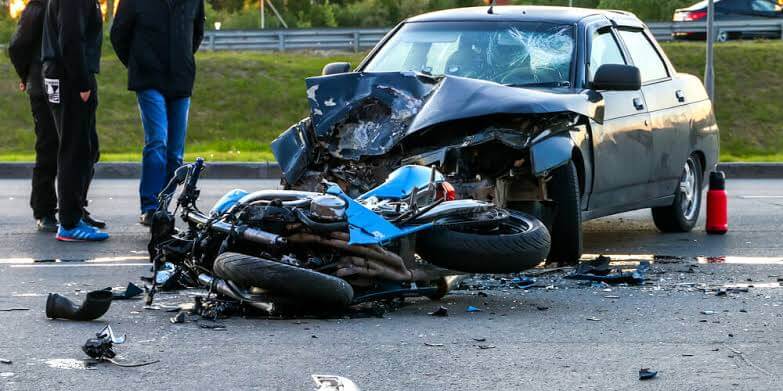
Motorcycle accidents happen fast, and the moments right after a crash can feel overwhelming. Because riders have far less protection than someone inside a car, even a relatively minor collision can cause serious injuries like road rash, broken bones, or head trauma.
What you do in the minutes, hours, and days after a motorcycle accident can have a real impact on both your recovery and your ability to hold the at-fault driver accountable. Here is a step by step guide to protecting your health and your legal rights after a crash in Nevada.
Get to Safety
If you are able to move, get yourself and your motorcycle out of active traffic as soon as possible. Being struck a second time by another vehicle is a real risk, especially on busy Las Vegas roads or highways. If you cannot move safely, or if you suspect a neck, back, or spinal injury, stay still and wait for emergency responders rather than risking further harm.
Call 911 and Report the Accident
Call 911 right away, even if the crash seems minor. Reporting the accident brings police and paramedics to the scene, and it creates an official police report that becomes an important piece of evidence for your claim. Nevada law generally requires drivers to report accidents that involve injury, death, or significant property damage, so this step protects you legally as well as physically.
When the officer arrives, give an honest, factual account of what happened. Stick to the facts and avoid guessing about things you did not actually see, such as how fast the other vehicle was traveling.
Get Medical Attention, Even If You Feel Fine
Adrenaline can mask pain immediately after a crash, and some of the most serious motorcycle accident injuries, including internal bleeding, concussions, and soft tissue damage, do not show symptoms right away. Do not remove your helmet or riding gear on your own after a crash, since it may be stabilizing an injury, and let paramedics assess you at the scene.
Even if you are cleared at the scene or decide not to go to the hospital immediately, see a doctor as soon as possible afterward. Your medical records are one of the most important pieces of evidence in a personal injury claim, since they directly connect the accident to your injuries and support the value of your case.
Document the Scene
If you are physically able to, or if a passenger or bystander can help, gather as much evidence as possible before leaving the scene:
- Take photos of the vehicles involved, the road, skid marks, traffic signals, and weather conditions
- Photograph your injuries, your damaged helmet, and any torn or damaged riding gear
- Take pictures of the other driver’s license plate, license, and insurance card
- Note the exact time and location of the crash
Damaged gear like a helmet or jacket should be kept, not thrown away, since it can serve as physical evidence of the force of the impact.
Exchange Information, but Avoid Discussing Fault
Exchange names, phone numbers, insurance information, and license plate numbers with the other driver. It is natural to want to apologize or explain what happened after a stressful crash, but avoid making statements that could be interpreted as admitting fault, even if you think you may have contributed to the accident. Fault is often more complicated than it seems in the moments after a collision, and a full investigation may reveal factors you were not aware of.
Talk to Witnesses
If anyone saw the accident happen, ask for their name and contact information before they leave the scene. Independent witnesses can provide an unbiased account of what happened, which is especially valuable in motorcycle accident cases, where riders are sometimes unfairly blamed for crashes that were actually caused by an inattentive or careless driver.
Notify Your Insurance Company
Most insurance policies require you to report an accident within a reasonable time, so contact your insurer once you are safe and have received any necessary medical care. Stick to the basic facts of what happened and avoid speculating about fault or giving a detailed recorded statement until you have spoken with an attorney, since insurance adjusters, including your own, are trained to look for ways to limit what they pay out.
Keep Records of Everything
Building a strong claim depends on documentation. Keep copies of:
- Medical bills, records, and imaging results
- Pay stubs or income statements if you miss work
- Receipts for repairs, medication, or medical equipment
- Photos and notes from the scene
- All correspondence with insurance companies
A simple journal tracking your pain levels, physical limitations, and how your injuries affect your daily life can also help support a claim for pain and suffering later on.
Understand Nevada’s Motorcycle Laws
Nevada has specific traffic laws that can affect a motorcycle accident claim. Nevada requires all riders and passengers to wear a Department of Transportation approved helmet, regardless of age or experience level, under NRS 486.231. Failing to wear a helmet will not necessarily prevent you from recovering compensation, but it can become an issue insurance companies raise when arguing about the extent of head or facial injuries.
Nevada also does not allow lane splitting, meaning motorcyclists are not permitted to ride between lanes of traffic. If lane splitting or another traffic violation is a factor in your accident, it can affect how fault is assigned under Nevada’s comparative negligence rules.
Why Motorcycle Accident Claims Are Different
Motorcycle accident claims often come with unique challenges that car accident claims do not. Riders sometimes face unfair bias from insurance adjusters or juries who assume a motorcyclist was speeding or riding recklessly, even when the true cause was a distracted or negligent driver. Motorcycle injuries also tend to be more severe than injuries from typical car accidents, since riders have little more than a helmet and protective gear between them and the road.
Because Nevada is an at-fault state, the driver who caused the crash, and their insurance company, is financially responsible for the resulting damages. Proving fault clearly and documenting the full extent of your injuries is especially important in motorcycle cases, where insurers are more likely to dispute liability or downplay the severity of harm.
Nevada’s Statute of Limitations for Motorcycle Accident Claims
In Nevada, injury victims generally have two years from the date of the accident to file a personal injury lawsuit under NRS 11.190. Waiting too long to take legal action can result in losing your right to compensation entirely, even if your case is otherwise strong. Because evidence and witness memories fade quickly, it is best to speak with an attorney as soon as possible after a crash.
Talk to a Nevada Motorcycle Accident Attorney
Motorcycle accidents can turn your life upside down in an instant, leaving you with serious injuries, mounting medical bills, and an insurance company that may be looking for reasons to minimize your claim. Our Las Vegas motorcycle accident lawyers at Court King Law understand the unique challenges riders face and are ready to fight for the full compensation you deserve. Contact us today for a free consultation.
Additional Resources
- Nevada Revised Statutes 486.231 — the state law requiring helmets for motorcycle riders and passengers
- Nevada Revised Statutes 11.190 — the statute setting Nevada’s two year filing deadline for personal injury claims
- Nevada Department of Motor Vehicles: Motorcycle Safety — licensing, safety course, and motorcycle law information from the Nevada DMV
- NHTSA: Motorcycle Safety — national data and safety guidance from the National Highway Traffic Safety Administration
Related Blog Posts